
Grow your store
Does an Ecom Outpost Listing Help Your Store's SEO? An Honest Answer
A listing that links to your site is one small piece of ecommerce SEO, and here is how to judge it without fooling yourself.
Practical help for store owners: getting found, getting traffic, and ecommerce SEO.
A listing that links to your site is one small piece of ecommerce SEO, and here is how to judge it without fooling yourself.
Three names come up again and again, but the right one depends on where your customers live, what you print, and how much you care about the box it arrives in.
A small budget is a fine place to start a store, as long as you know which costs are real and which ones are just anxiety.
Loyalty isn't a points program you bolt on; it's the second order being an easy decision, and most of that is settled before the first package ships.
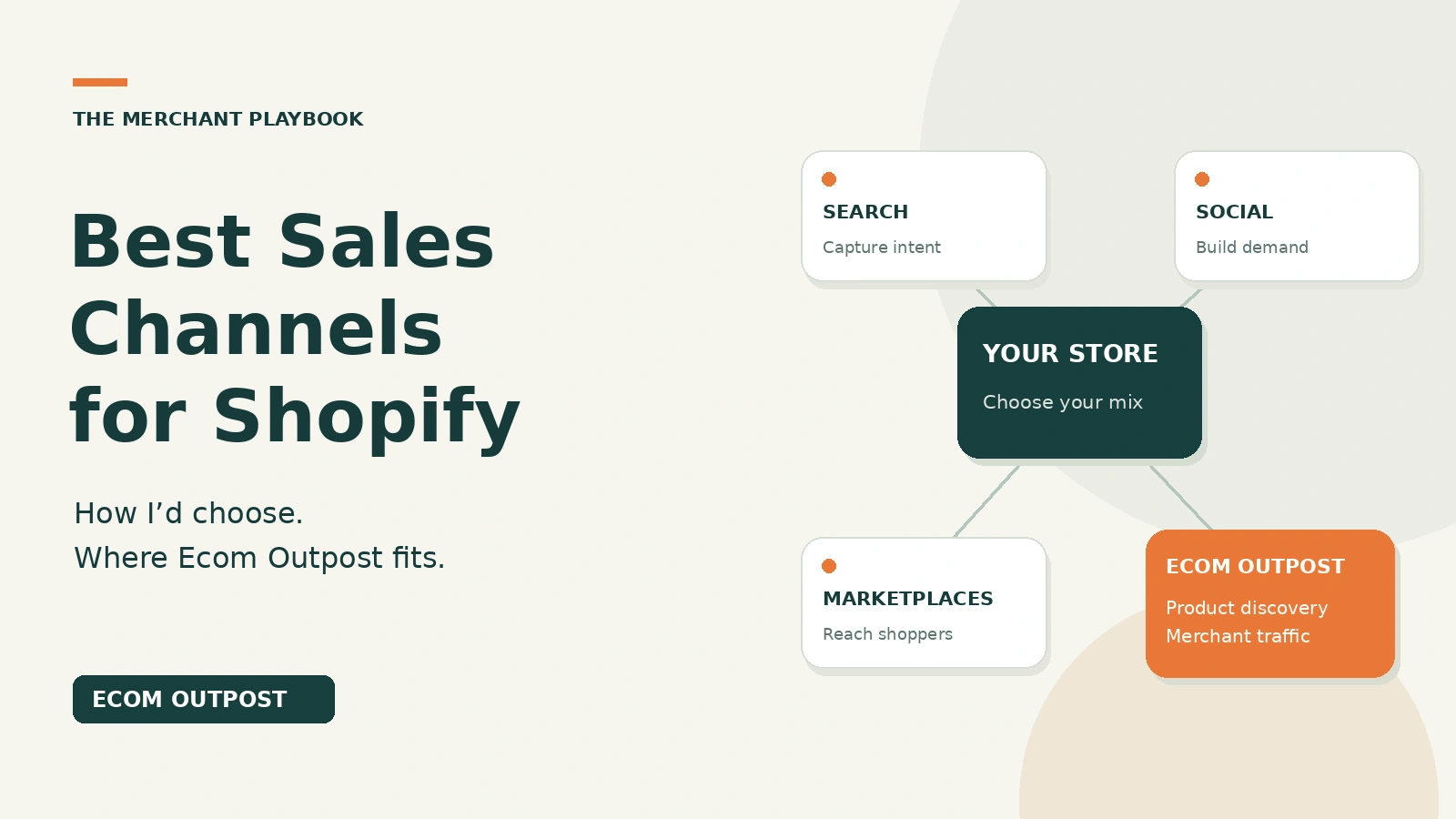
Marketplaces, social shops and discovery sites all do different jobs, and the right mix depends on who already knows your store.
How print on demand works, what a review of a POD service can tell you, and what you have to find out yourself.
A working list for the days before launch, from picking the idea to the settings most owners forget until a customer hits them.
Shopify, WooCommerce, BigCommerce and the rest all sell things; the real choice is about who does the upkeep, how you get paid and what you can see.
There is no single winner, but there is a sensible order, and one gap most small stores leave open.
The second order is cheaper than the first, but only if you measure it, earn it, and stop assuming a loyalty app will do the work.
A directory listing won't make a store famous, but it can put you in front of shoppers who are already browsing, and that's worth knowing how to use.
A blog can bring shoppers to your store without ad spend, but only if you pick topics on purpose and measure each stage.