Every first sale is a bet. You spent time or money to get a stranger to your store, and you hope the order covered it. Sometimes it doesn't. A repeat customer is how you win the bet without paying the entry fee again.
Most small store owners I talk to spend nearly all their energy on the front door: ads, listings, search. That work matters, and if you want one more place for shoppers to find you, you can join Ecom Outpost. But this article is about what happens after the first order, because that's where a lot of stores quietly leave money behind.
I'll say my position now. Repeat customers aren't a tactic you bolt on with an app. They are mostly the result of a product that matched its page, a package that arrived looking like it came from a real brand, and a store the shopper remembers. The tactics only amplify that.
Measure the second order before you try to improve it
You can't fix what you've never counted. The formula is simple, and Shopify's retention guide gives it as customers who purchased more than once, divided by unique customers, times 100. Pull your orders, group by customer, and do the math. It takes an afternoon, and most of that afternoon is cleaning up duplicate emails.
Then you'll want something to compare it with. Most 2026 benchmarks put the average ecommerce repeat purchase rate at 25% to 30% over 12 months, according to one roundup. Treat that as a rough ruler, not a grade. A store selling a mattress or a wedding dress has a different natural rhythm than one selling socks or coffee. If your product is bought once a decade, a low rate isn't a failure. It means your growth has to come from referrals and new buyers, and you should know that going in.
One habit from my own stores applies here. I've learned that I need to evaluate stages separately. A store can show up in search without drawing clicks, and clicks don't always become orders. Impressions are not sales. The same logic holds after the sale. An order is not a customer relationship, and a customer is not a repeat customer. Count each stage on its own before deciding what's broken.
And be careful where you read your numbers. I've seen the sales Shopify reports differ from the sales Meta attributes to its ads. That taught me not to trust one dashboard to explain where customers came from. For repeat buyers, your own order data in Shopify is the place to start, since it sees every order no matter which channel brought the person in. If you're looking for the leaking stage on the way in, this earlier piece on visitors who don't convert walks through it.
 List your storeon Ecom Outpost
Why the small group matters
Here's the number that changed how I think about it. Repeat customers make up only 21% of customers, yet they generate 44% of revenue and 46% of orders, according to Gorgias data as reported by Opensend. That's one set of stores, not a law of nature, and yours may look different. But the shape is what matters: a minority of buyers carries a lot of the weight.
If that holds even loosely for you, it changes where an hour is best spent. An hour spent making the existing buyers' second order easier may do more than an hour chasing another stranger. I'm not saying stop acquiring customers. I'm saying don't treat the people who already trusted you with their card number as a finished chapter.
What brings people back
It helps to look at what shoppers say pulls them back. Adobe's loyalty research listed key repeat purchase drivers: fair pricing (69%), high product quality (66%), positive past experience (61%), excellent service (58%), and convenience (53%). Look at that list for a second. Nothing on it is a points program or a clever email subject line. It's the product, the experience, and how easy you are to deal with.
That's good news for a small store, because you can control most of those items directly. I'll take them in the order I'd fix them.
The product has to match the page
I've had to make a lot of practical decisions about how my products are presented, from descriptions and images to packaging and brand identity. What I took from it: presentation is part of the business, not decoration on top of it. If the page tells a shopper what to expect and the product delivers exactly that, the second order is easy. If the page oversells, you've made a one-time buyer and possibly a refund.
So before you build any retention flow, reread your best-selling product page as if you were the buyer holding the box. Does the description say what the item is, in plain words? Do the images show what arrives? If you're not sure, that's the first fix, and it's free.
The unboxing is your second pitch
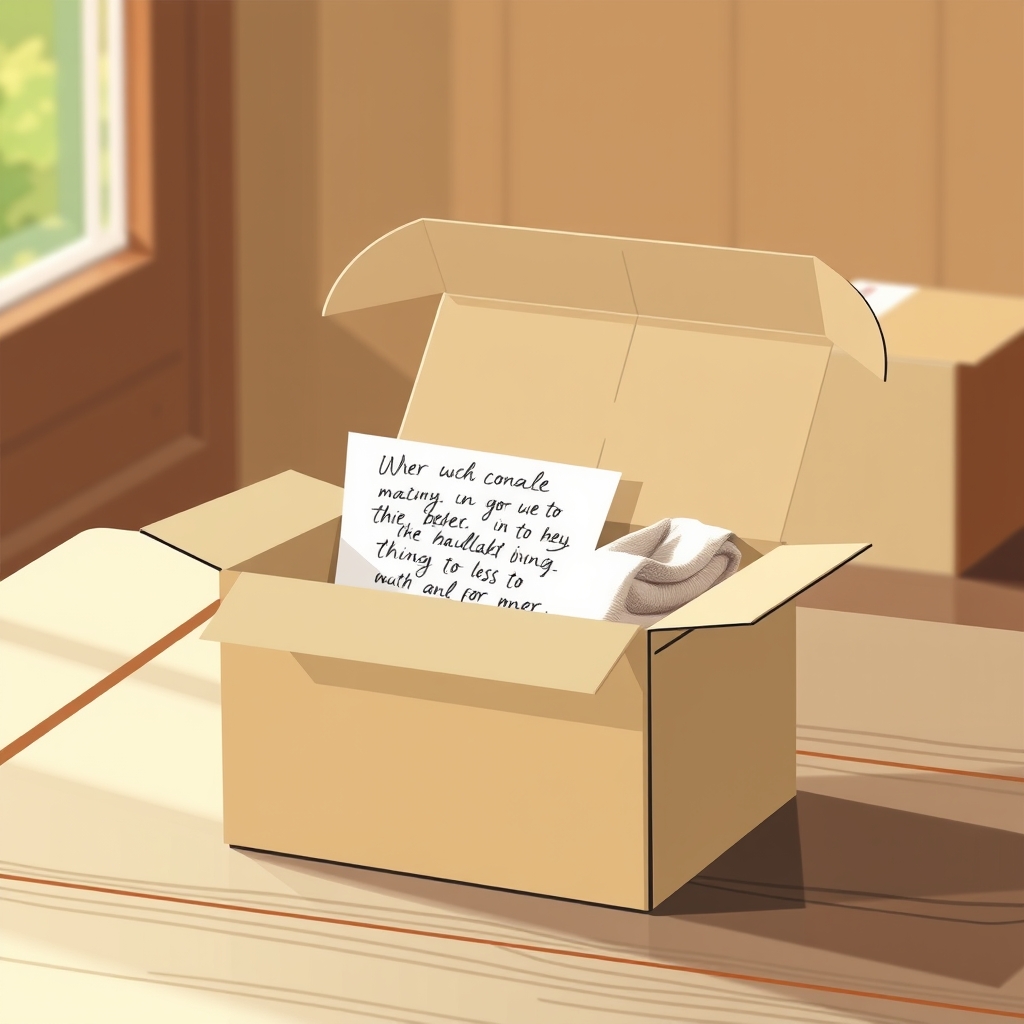
The package is the one piece of marketing every customer opens. It tells them whether you're a real brand or a drop in a warehouse. You don't need expensive packaging. You need it to look intentional: your name on it somewhere, a clear note about how to reach you, and nothing that makes the shopper wonder who sent this.
If you sell print on demand or dropship, this is harder, because someone else packs the order. Check what branding options your supplier offers before you commit, and order a sample to see what a customer sees. That's what I'd look for, anyway. A supplier with no way to put your name on anything is a supplier that will make it hard for people to remember you.
Make the second order easy
Convenience was on that list too, and it's the one stores skip. Think about what a returning customer wants: to find the thing they bought last time, or its sibling, without hunting. A few things I'd check:
- Can a shopper find the product they bought from the order confirmation email in one click?
- If an item is consumable or replaceable, does the page say so, so they know to come back?
- Do related products on the page make sense, or are they random?
- Is the shipping and returns information easy to find and written in normal language?
None of that costs anything but attention.
Loyalty programs: useful, but not first
The surveys on loyalty programs are enthusiastic. A LoyaltyLion survey of 2,000 U.S. consumers found that 91% said being a member of a loyalty program influences their decision to repeatedly purchase from the brand. That's a real signal, and I wouldn't dismiss it. It is also a survey tied to a company that sells loyalty software, so I read it with that in mind.
Here's my honest take for a small store. If you have a few dozen customers and a repeat rate you've never measured, a points program is a distraction. It adds a plugin, a page, and rules you have to explain, and it rewards behavior you haven't yet earned. Build the product and the experience first. Add a program when you have enough repeat buyers that a reward feels like thanks rather than a bribe.
There's a cheaper version worth noting. A Razorfish survey found that softer perks like exclusivity, early access, and VIP treatment matter alongside discounts and points. You can do that by hand. Tell past customers about a new product before you announce it publicly. Give them first look at a restock. That's an email, not a platform, and it costs you nothing but a list.
Own the list, because you own the checkout
This is where selling on your own store has an edge. When a shopper finds you through Ecom Outpost, they click through and buy on your website, so you keep the checkout and the customer. That means the email address, the order history, and the relationship are yours. Nobody inserts themselves between you and the person who just bought. I'd treat that as the point. If a channel hands you a buyer but hides who they are, you're renting. If it sends them to your checkout, you can build something.
So make use of it. Collect emails at checkout with a clear reason to subscribe. Send something useful: how to use or care for the thing they bought, a note when a product they looked at returns, a heads-up about a new item in the same category. Keep it short. Nobody wants a newsletter that feels like a form letter.
I'll admit I can't give you a send schedule or a promised lift, because that would mean inventing numbers. What I can say is to watch the result in your own data: compare repeat orders from people on your list against those who aren't, and see whether it moves. If it doesn't, change the message before you add more messages.
What I'd do this week
If I were looking at a store of mine tomorrow with this question, here's the order.
First, calculate the repeat rate from your own orders, using the formula above. Write the number down, even if it's ugly.
Second, reread the top product page and compare it against the package a customer actually receives. Fix the gap.
Third, set up one email that goes out after delivery and helps the shopper use what they bought. Not a discount. Help.
Fourth, pick one soft perk you can deliver by hand, like early access for past buyers, and try it on the next launch.
Fifth, look at the number again in a few months, and compare it against your order data rather than any single ad dashboard.
If you're short on first-time buyers to turn into repeat ones, that's a different problem, and the ranked list of ways to get customers covers it by cost. When you're ready to add another place where shoppers can discover your store and buy at your own checkout, list your store on Ecom Outpost. It doesn't replace any of the work above. A listing can introduce you, but the second order still depends on what you ship and how it feels to open.
The cheapest customer you'll ever get is the one who already knows what your box looks like. Build for that person on purpose.