Grow your store
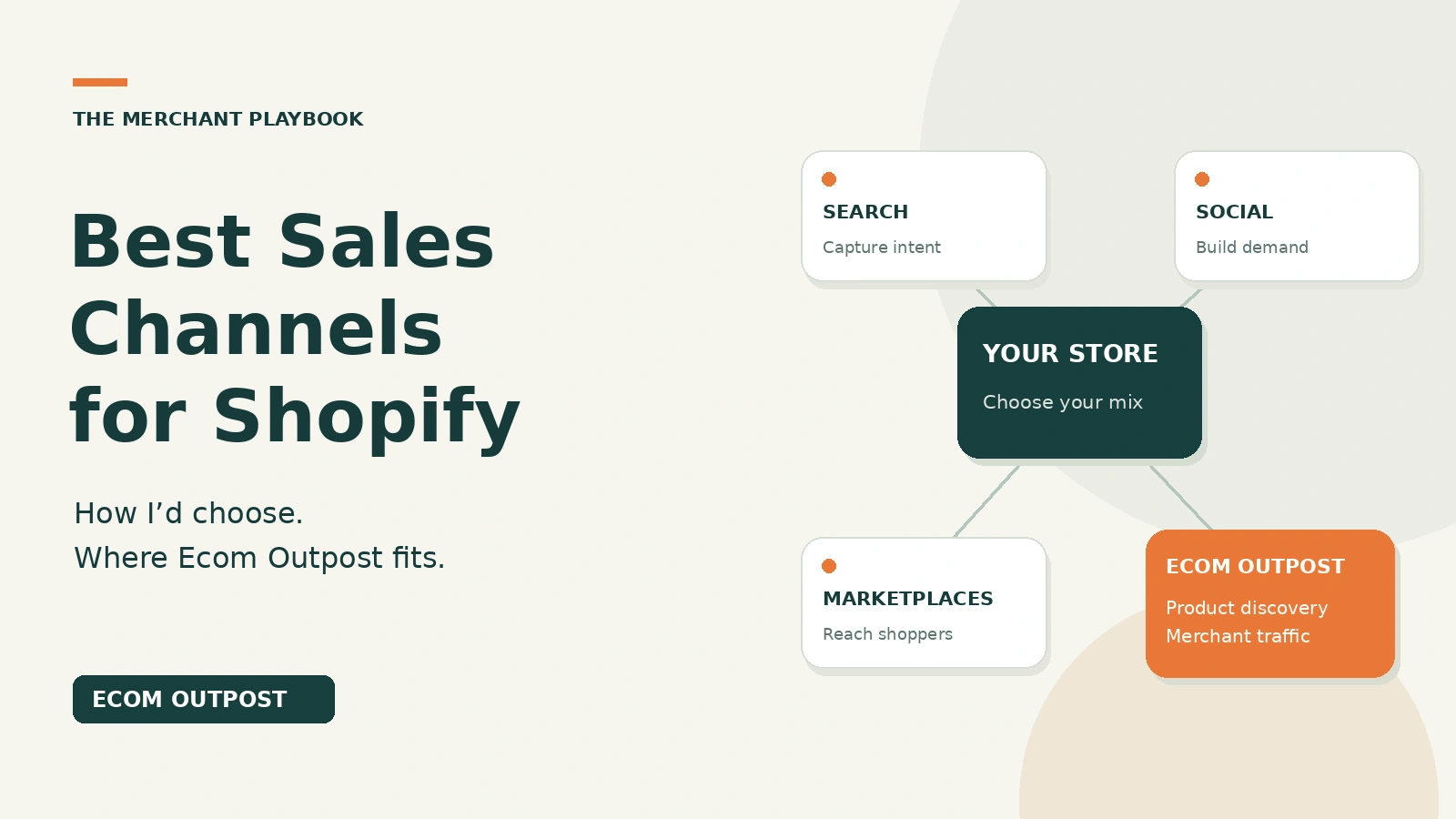
Best Sales Channels for Shopify: How I'd Choose, and Where Ecom Outpost Fits
Marketplaces, social shops and discovery sites all do different jobs, and the right mix depends on who already knows your store.
The Ecom Outpost team writes about finding great independent stores and helping store owners get discovered.
Marketplaces, social shops and discovery sites all do different jobs, and the right mix depends on who already knows your store.
How print on demand works, what a review of a POD service can tell you, and what you have to find out yourself.
A working list for the days before launch, from picking the idea to the settings most owners forget until a customer hits them.
Shopify, WooCommerce, BigCommerce and the rest all sell things; the real choice is about who does the upkeep, how you get paid and what you can see.
There is no single winner, but there is a sensible order, and one gap most small stores leave open.
The second order is cheaper than the first, but only if you measure it, earn it, and stop assuming a loyalty app will do the work.
A directory listing won't make a store famous, but it can put you in front of shoppers who are already browsing, and that's worth knowing how to use.
A blog can bring shoppers to your store without ad spend, but only if you pick topics on purpose and measure each stage.
A product page has to work for Google, for a stranger on a phone, and for the shopper who almost buys, so here's how I'd build one.
When cash is thin you pay in hours instead, and hours are just as easy to waste on work that feels like marketing but isn't.
The sale banner is the last step of a seasonal push, and most of what decides your results happens weeks earlier.
Most of the useful SEO work costs hours instead of dollars, and a few free tools can tell you whether it's working.